

You made an excellent decision by installing solar panels in your home or business in the Dominican Republic. You now have access to one of the most abundant energy sources on the planet: the Caribbean sun that shines generously over our island all year round.
However, that same tropical climate that makes the Dominican Republic a paradise for solar generation also presents unique challenges for maintaining your system. High humidity, heavy rainfall, coastal salt exposure, Saharan dust, and hurricane season are factors that require specific attention to keep your panels operating at peak performance for decades.
In this comprehensive guide, you will learn exactly how to care for your solar system under the climate conditions of the Dominican Republic, maximizing your investment and ensuring the best possible performance.
Why Maintenance Is Crucial in Tropical Climates
Although solar panels are known for requiring minimal maintenance, the specific conditions of the Caribbean demand more careful attention than in temperate climates.
The Impact of Saharan Dust
Between May and October, the Dominican Republic regularly receives clouds of dust from the Sahara Desert. This meteorological phenomenon, known locally as “calima,” deposits a fine layer of particles on panels that can significantly reduce their efficiency.
According to studies from the U.S. National Renewable Energy Laboratory (NREL), dirt accumulation on solar panels can reduce production by 5% to 25%, depending on severity and cleaning frequency.
Humidity and Salinity: The Coastal Challenge
If your installation is in coastal areas such as Punta Cana, Puerto Plata, or any location near the sea, ocean breezes carry salt particles that settle on panels and metal components. Without proper maintenance, this salinity can:
- Accelerate corrosion of mounting structures
- Create a cloudy film on panel glass
- Damage exposed electrical connections
- Reduce component lifespan
Tropical Rains: Both Allies and Enemies
Frequent Caribbean rains help naturally clean panels, but they also bring:
- Pollen deposits and organic debris
- Potential accumulation of leaves and branches
- Moisture that can infiltrate poorly sealed connections
- Runoff that drags dirt toward panel edges
Annual Maintenance Calendar for the Dominican Republic
Based on the island’s specific climate conditions, here is an optimized maintenance schedule:
January – March: Dry Season
Cleaning frequency: Every 4–6 weeks
During months of lower rainfall, dust and particles accumulate more quickly. This is the ideal time to:
- Perform a complete visual system inspection
- Clean panels more frequently
- Check the condition of mounting structures
- Inspect electrical connections before rainy season
April – May: Transition to Rainy Season
Cleaning frequency: Every 3–4 weeks (especially during calima events)
Saharan dust begins arriving with greater intensity. Pay special attention to:
- Cleaning after significant dust events
- Ensuring roof drains are clear
- Inspecting seals and connections before heavy rains
June – November: Hurricane Season
Cleaning frequency: Monthly (except after storms)
This period requires special vigilance:
- Immediate inspection after any tropical storm
- Checking anchors and mounting structures
- Cleaning accumulated vegetation debris
- Inspecting inverter and connections for possible water damage
December: Year-End Maintenance
Frequency: Full annual inspection
The end of the year is the perfect time to:
- Conduct a complete professional inspection
- Review annual system performance
- Plan necessary repairs or upgrades
- Verify warranties remain valid
Step-by-Step Guide: Cleaning Solar Panels
Regular cleaning is the most important maintenance task and can be done safely with proper precautions.
Required Equipment
- Hose with low or moderate pressure
- Bucket of clean water (preferably demineralized)
- Soft sponge or microfiber cloth
- Squeegee with extension handle
- Biodegradable neutral soap (optional)
- Safe ladder or roof access
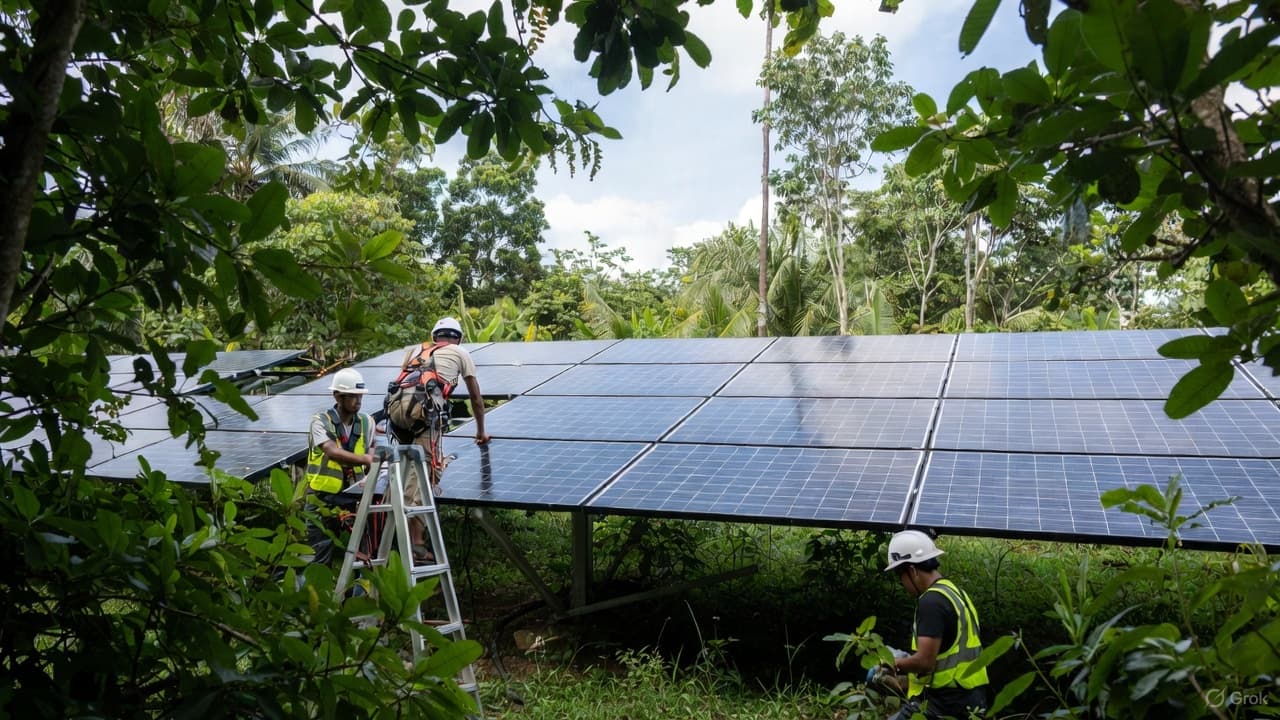
- Personal protective equipment (non-slip footwear, safety harness if necessary)
Safe Cleaning Process
Step 1: Choose the Right Time
Never clean panels during peak sunlight hours (10 AM – 3 PM). Hot glass combined with cold water can cause thermal stress and microcracks. The best times are early morning or late afternoon.
Step 2: Safety Shutdown
Although not strictly necessary for external cleaning, consider turning off the system at the inverter if working near electrical connections.
Step 3: Initial Rinse
Use the hose to remove loose dust and large debris. Work from top to bottom.
Step 4: Gentle Cleaning
If rinsing isn’t sufficient, use a soft sponge with clean water. Absolutely avoid:
- Abrasive cleaners
- Rough sponges or hard brushes
- Aggressive chemicals
- Steam or high-pressure cleaners
Step 5: Final Rinse
Remove any soap residue with clean water.
Step 6: Visual Inspection
While cleaning, check for:
- Cracks or visible glass damage
- Cell discoloration
- Loose or damaged cables
- Frame and seal condition
Special Considerations for Coastal Areas
If your installation is near the ocean:
- Increase cleaning frequency to every 2–3 weeks
- Pay special attention to edges and frames where salt accumulates
- Regularly check aluminum structures for corrosion
- Consider applying anti-corrosion protectants to exposed metal parts
Inverter Maintenance: The Heart of Your System
The inverter converts DC electricity into usable AC power and requires specific care.
Monthly Maintenance
- Check that indicator lights show normal operation
- Ensure ventilation is unobstructed
- Listen for unusual noises
- Monitor production readings
Quarterly Maintenance
- Clean ventilation grills
- Verify electrical connections are secure
- Inspect for signs of moisture or corrosion
- Check cable conditions
Warning Signs
Contact your installer immediately if you notice:
- Persistent error lights
- Significant production drop
- Abnormal buzzing or clicking
- Burning smells or overheating
- Error messages
Preparing for Hurricane Season
Hurricane season (June–November) requires special preparation.
Before the Season
- Inspect anchoring points
- Review insurance coverage
- Document system condition with photos
- Know how to safely disconnect the system
During a Hurricane Warning
- Modern hurricane-certified panels usually do not need removal for Category 1–2 storms
- For stronger hurricanes, consult your installer
- Disconnect the system at the main switch
- Document system condition beforehand
After the Hurricane
Before reconnecting:
- Look for cracked or displaced panels
- Check exposed or damaged cables
- Inspect mounting structures
- Check inverter for water damage
Do not reconnect if damage is observed.
Performance Monitoring: Your Best Diagnostic Tool
Modern monitoring systems help detect issues early.
What to Monitor
- Daily production
- Month-to-month comparison
- System alerts
When to Be Concerned
- More than 15% reduction from expected output
- Inconsistent panel performance
- Frequent inverter errors
- Unexplained production drops
Professional Maintenance: When to Call the Experts
Annual professional inspection should include:
- Infrared thermography
- Insulation resistance testing
- Electrical connection inspection
- Grounding system review
- I-V curve analysis
- Inverter firmware updates
Professional maintenance can recover up to 8% of lost production due to preventable factors.
Maintenance Costs: What to Expect
Typical costs in the Dominican Republic:
- Professional cleaning: RD$2,000 – RD$5,000
- Annual inspection: RD$5,000 – RD$15,000
- Minor repairs: RD$3,000 – RD$10,000
- Recommended annual budget: 1–2% of system cost
Common Mistakes to Avoid
- Ignoring maintenance
- Using incorrect cleaning products
- Cleaning during peak heat
- Walking on panels
- Ignoring shading issues
Warranties and Maintenance
Improper maintenance can void warranties. Keep records of:
- Maintenance dates
- System photos
- Inspection reports
- Monthly production data
Frequently Asked Questions
How often should I clean my panels?
Every 4–6 weeks normally, every 2–3 weeks during dust season.
Can I use tap water?
Yes, but hard water may leave mineral residue.
Do I need to turn off the system?
Not for standard cleaning, but avoid working near live electrical parts.
What if I find a cracked panel?
Disconnect safely and contact your installer immediately.
Can birds damage panels?
Bird droppings are acidic and should be cleaned promptly.
Conclusion: Protect Your Solar Investment
Maintaining your solar system in the tropical climate of the Dominican Republic doesn’t have to be complicated or expensive. With regular cleaning, periodic inspections, and attention to local conditions, you can ensure your investment produces clean energy and significant savings for 25 years or more.
A well-maintained system produces more energy, preserves its value, and protects your warranties.
Need help maintaining your solar system?
We connect solar system owners with certified technicians throughout the Dominican Republic. Request an inspection or maintenance quote from verified installers in your area.
Last updated: December 2025
This article is part of our educational series on solar energy in the Dominican Republic. For more information on maximizing your solar investment, explore our additional resources or contact our advisory team.